The Way of the Cross Leads to Heaven
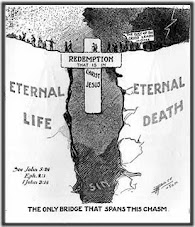
JOHN 14:6 JESUS CHRIST said: I AM THE WAY
Wednesday, December 8, 2010


Wednesday, November 17, 2010
THE SIN OF UNBELIEF
TO THE READER:
The following article is a sad and tragic story of one who professed but never was in possession of genuine salvation through faith in the LORD Jesus Christ alone. Let the story of this man be a WARNING to those who are just professing Christians. Let everyone: BEWARE of FALSE PROPHETS AND TEACHERS.
Ultimately, one will make a choice: BELIEVE MAN'S WORD OR BELIEVE GOD'S PRECIOUS PURE WORD, THE HOLY SCRIPTURES. YOUR CHOICE HAS ETERNAL CONSEQUENCES AND RAMIFICATIONS!
Statements in [ ] bracket are the blogger’s in light of Holy Scriptures.
Be guided accordingly!
______________________
The slippery slide to unbelief
A famous evangelist goes from hope to hopelessness
First published:
Creation ex nihilo 22(3):8–13
June 2000
by Ken Ham and Stacia Byers
During a speaking trip to England, Professor John Rendle-Short (Chairman emeritus, Answers in Genesis Australia) told a group of pastors that if they rejected a literal Genesis in favour of evolutionary ideas (or even just millions of years), this would put them on a slippery slide of unbelief. If we re-interpret God’s Word in Genesis to fit man’s fallible opinion, then ultimately, it would only be consistent to apply this same hermeneutic (method of interpretation) elsewhere — even to Christ’s Resurrection.
After he had spoken, one pastor, who had been defending compromise positions in regard to Genesis, said to him, ‘I think I’m a long way down that slippery slide already.’
We see that ‘slippery slide’ illustrated more and more in Western culture. For instance, a 1999 newspaper report stated:
‘A growing number of liberal [Apostate] Christians and scholars do not believe that Jesus rose bodily from the dead.’1
But what could be the cause of such a slide into unbelief in a matter so vital and central to the Gospel, as the Resurrection? We suggest that one of the major reasons is that as people have compromised the book of Genesis with the idea of millions of years, and/or evolutionary concepts, increasing numbers have eventually consistently applied the same hermeneutic to the rest of the Bible.
[I say the main reason is rejection of God’s Precious Pure Word, the Holy Bible and instead acceptance of finite, puny man’s words which are merely “man’s fallible opinion”. What folly and stupidity to believe man’s word instead of God’s Word. Beware Jeremiah 17:5 KJV applies]!
This has led to a mythologizing of the Word of God, an undermining of its absolute authority, and eventually often leads to a rejection of the orthodox Christian message.
[Therefore, rejection of Holy Scriptures. Note John 12:48].
‘Progressive creationists’ like Dr Hugh Ross,2 who insist on interpreting Genesis in the light of man’s theories like the ‘big bang’, and the supposed ‘proof’ of an old earth (billions of years), insist that those who teach a young earth and literal Genesis 1–11 are the ones putting a stumbling block in the way of scientists and others accepting the Gospel message. However, time and time again, we have found that the opposite is true. Compromising Genesis with man’s ideas from outside of Scripture opens the door to this ‘slippery slide of unbelief’. It becomes a major stumbling block to people being receptive to God’s Word and the Gospel. Unbelievers are generally unimpressed when they see Christians
[such people are just professing Christians not necessarily authentic, genuine, true born again Christians who are Bible Believers]!
clearly evading the obvious meaning of the beginning of their own book.
Following is the sad account of the life of a once prominent and successful evangelist, his slide into unbelief and his rejection of Christianity. In 1996, the book Farewell to God was published for all the world to see the author, Charles Templeton, claim:
‘I oppose the Christian Church because, for all the good it sometimes does, it presumes to speak in the name of God and to propound and advocate beliefs that are outdated, demonstrably untrue, and often, in their various manifestations, deleterious to individuals and to society.’3
As this story unfolds, you will see the devastating results of compromising man’s theories with God’s Word, beginning in Genesis.
[The choice is: Man’s word or God’s Word. Man will make a choice. Beware though of the choice you make for there are eternal consequences: heaven or hell. This is the truth whether man believes it or not. Biblical Truth is Absolute Truth despite puny man’s fallible opinion.]
Who is Charles Templeton? Fuelled by concern about the spiritual state of post-Depression youth, mass evangelism exploded onto the American scene in the 1940s. Thousands of young servicemen and civilians streamed to arenas to see the programs, which included preaching, music, and various acts.
One of the leaders in this movement was a young man from Canada, Charles Templeton, born in 1915. He was generally acknowledged to be the most versatile of the new young evangelists. Templeton soon rose to prominence, even surpassing another dynamic young preacher, Billy Graham. In 1946, he was listed among those best used of God by the National Association of Evangelicals.4
As the pastor of the rapidly growing Avenue Road Church in Toronto, which he had started with only his family and a few friends, Templeton also became one of three vice-presidents of the newly-formed Youth For Christ International organization in 1945. He then nominated his good friend, Billy Graham, to be field evangelist for the new ministry. Templeton, Graham, and a few others regularly spoke to thousands, winning many to Christ both in America and in Europe.
[God’s Precious Pure Word is alive, powerful, like a two-edged sword (Hebrews 4:12 KJV) even in the lips of professing, apostate so-called pastors and evangelists like Templeton and Graham. Billy Graham today is like his friend, an apostate. And so, inspite of these two men, it is God’s Word that converts (Psalm 19:7 KJV) not man. Praise the LORD for those who got converted and saved in the “ministry” of these men. It is so because of the grace of God! Beware of making friends with “pretenders to the Christian faith”. The old saying is true: “tell me who your friends are and I will tell you who you are”].
Newspapers and magazines carried reports of his meetings informing readers he was winning 150 converts a night. In Evansville, Indiana, the total attendance over the two week campaign was 91,000 out of a population of 128,000. Church attendance went up 17%.
However, despite his popularity and seeming success as an evangelist, all was not well with Charles Templeton. The more he read, the more he found he was beginning to question the essentials of the Christian faith, because he could no longer believe God’s Word beginning with Genesis.
In a conversation with Billy Graham concerning Templeton’s desire to attend Princeton Theological Seminary, Templeton stated:
‘But, Billy, it’s simply not possible any longer to believe, for instance, the biblical account of creation. The world wasn’t created over a period of days a few thousand years ago; it has evolved over millions of years. It’s not a matter of speculation; it’s demonstrable fact.’5
Templeton warned Graham that it was ‘intellectual suicide’ to not question the Bible and to go on preaching God’s Word as authoritative.
With this background of doubt [UNBELIEF] about God’s Word welling up inside, and lacking any type of formal education, he decided to pursue a degree in theology at Princeton Theological Seminary. Resigning from the church he had pastored for several years, Templeton began, with special permission, his coursework at Princeton in 1948.
[Princeton Theological Seminary is a breeding place for unbelievers not Bible believers. It has long become a liberal and Bible rejecting seminary. Billy Graham must have encouraged his friend Charles Templeton to pursue his theological education in Princeton].
Rather than assuage his doubts by providing sound theological answers for the questions he had concerning the authority of the Bible, the historical veracity of Genesis and the deity of Christ, Princeton only served to increase his qualms. This is not surprising, considering the influences that had infiltrated Princeton through people like Charles Hodge and B.B. Warfield concerning one’s approach to the Scripture in Genesis. For instance, Hodge, who accepted the millions of years and rejected literal creation-days, taught:
‘It is of course admitted that, taking this account [Genesis] by itself, it would be most natural to understand the word [day] in its ordinary sense; but if that sense brings the Mosaic account into conflict with facts, [millions of years] and another sense avoids such conflict, then it is obligatory on us to adopt that other.’6
Warfield (1851–1921) went further and, unlike Hodge, even accepted Darwinism.*
Templeton, like generations of others, was taught at Princeton to reject parts of Genesis in favour of man’s beliefs concerning such things as billions of years.7
After graduating from Princeton, Templeton accepted a position with the National Council of Churches, conducting preaching missions across the United States and Canada.
However, he faced increasing health problems, specifically frequent chest pains. He visited a specialist in Pennsylvania who encouraged him, after finding nothing wrong with his heart, to clear up the conflict in his life — namely the doubts he harboured about the authority of the Bible from which he so fervently preached to thousands each night.8
This reminds of another who suffered illness because of a great conflict in his life regarding teaching that undermined God’s Word. Charles Darwin, who started out in training to be an Anglican minister, ended up rejecting Christianity the more he believed in evolution. It has been said that inner conflict, because of knowing that evolution would wipe the idea of God from the minds of millions, contributed greatly to Darwin’s psychosomatic illness.9
Templeton’s struggles affected others, too. As Templeton wrestled with the ‘demonstrable fact’ of evolution which made it impossible for him to believe ‘the biblical account of creation’,10 he sought out his close friend, Billy Graham. This caused Graham as well to grapple with tough questions that shook the very roots of the faith he professed and preached daily — namely, ‘was the Bible completely true?’11
[Today, Billy Graham is an apostate. He believes now that one can be saved without knowing and putting one’s trust in the LORD Jesus Christ. He believes that there are many ways to the One True God, no longer through Jesus Christ alone].
With ‘science’ pulling Templeton one way and the Bible seemingly pulling him in an altogether different direction, he resigned from his position with the National Council of Churches and took over the Department of Evangelism of the Presbyterian Church USA. At the same time, he hosted a CBS TV series, called Look Up and Live.
Finally, however, the doubts about everything he stood for became too great and he decided to leave the ministry.
[All the while that he was in the ministry, he was “The Great Pretender”. He must have been a fan of “The Platters”. What folly!]
In his autobiography, Farewell to God, Charles Templeton lists his ‘reasons for rejecting the Christian faith’. Most of these relate to the origins issue and thus the accuracy of the book of beginnings — Genesis [this Internet version of the Creation magazine article has hyperlinks in angle brackets <> to answers on this website to his ‘reasons’ — Ed.]:
• Physicists who say ‘it took billions of years for the universe, our galaxy, our solar system, and our world to evolve to its present … form.’12
• Anthropologists who say that ‘our earlier ancestors did not suddenly appear fully formed, but were anthropoid creatures who lived on the earth millions of years ago.’13
• Geneticists who say it is ‘nonsense’ to believe that the ‘reason for all the crime, poverty, suffering, and general wickedness in the world’ is sin.13
• Geologists who say ‘there is no evidence whatsoever of a worldwide flood’ as told in Genesis.13
• The ‘fables’ (in Genesis 1 and 2) which have ‘remained the grounds of Christian theology across the centuries.’15
• Noah and his family were too primitive to have built the Ark.16
• All the animals could not possibly have fitted on the Ark.16
• Where did the water come from for the Flood?17
• Those Christians who ‘reject any advance in science or learning that contradicts the Genesis account of the creation of the world, the disobedience of Adam and Eve in the Garden of Eden, and God’s curse on the world and humankind … and who believe that the only deliverance from this curse and eventual banishment to an eternal hell is to be “born again”.’18
• The ‘grim and inescapable reality’ that ‘all life is predicated on death. Every carnivorous creature must kill and devour another creature. It has no option.’19
Two notable observations on these ‘reasons’ for rejecting the Christian faith20 are:
1. Most of these supposed ‘facts of science’, and the questions concerning Genesis, are issues that have been around for a long time, and are questions that are still asked by many today. It’s obvious that much of the Church has not adequately addressed these issues. This means there are many more ‘Templetons’ out there at various stages on the slippery slide of unbelief, because the Church is not doing what it should have done for Templeton — ‘… be ready always to give an answer to everyone who asks you a reason of the hope in you, with meekness and fear’ (1 Peter 3:15).
It’s also interesting to note that Answers in Genesis has answers to all of these matters in its (recently updated) The Answers Book,21 [as well as on this Web site, as shown — Ed.]. Answers are readily available — if only the Church would accept them and disseminate the information to their congregations.
2. Templeton, like Charles Darwin,22 had a big problem understanding how one could reconcile an earth full of death, disease, and suffering with the God of the Bible.
Templeton states:
‘Why does God’s grand design require creatures with teeth designed to crush spines or rend flesh, claws fashioned to seize and tear, venom to paralyze, mouths to suck blood, coils to constrict and smother — even expandable jaws so that prey may be swallowed whole and alive? … Nature is in Tennyson’s vivid phrase, “red in tooth and claw,” and life is a carnival of blood.’23
Templeton then concludes:
‘How could a loving and omnipotent God create such horrors as we have been contemplating?’24
One can fully understand his dilemma, considering he was indoctrinated to believe the earth was billions of years old. Since the fossil record would therefore represent billions of years of earth history, he would have to believe that the same death, disease and suffering in the world around us has been going on for millions and millions of years, and cannot be the result of sin, the Fall and the Curse.
One wonders whether Templeton would ever have written his Farewell to God, had the Church in his day rejected the billions of years, shown the fallible nature of the dating methods, and taught clearly that there could be no death, disease and bloodshed before sin. What a difference there might have been in his life if he had understood that the world he was observing was not the world as God originally made it, but one which was now suffering the effects of sin, the Curse and the Flood.
Had the Church (and colleges like Princeton) not compromised the Word of God with man’s fallible teachings — one could only wonder about what such a powerful evangelist might have accomplished under the hand of the Almighty God.
Those in the Church who compromise with the idea of an old earth (billions of years) cause those they come in contact with to stumble as Templeton did. If the earth is billions of years old — there is no loving God as the Bible portrays! Templeton completed his slide to unbelief by stating that the ‘entire resurrection story is not credible.’25
It’s even sad to see Templeton’s old friend Billy Graham in essence spreading doubt concerning Genesis when he answers questions about dinosaurs by claiming:
‘… the Bible does not specifically mention dinosaurs. The book of Job … does mention large creatures of Job’s time such as “the behemoth … whose tail sways like a cedar …”… This probably refers to the elephant or hippopotamus, however, since dinosaurs apparently died out long before God placed humans on the earth [emphasis ours].’26
So what is Charles Templeton doing today? Since leaving the ministry in 1957, Templeton has taken a prominent place in journalism. Among other things, he has been the executive managing editor of the Toronto Star, editor-in-chief of Maclean’s magazine, director of News and Public Affairs for the CTV television network, and is the author of twelve books.
He is using his influence in the secular media to spread his destructive message, attacking the infallible Word of God.
{Ed. note (added August 2001): Templeton died on 7 June 2001 aged 85, and sadly had suffered from Alzheimer’s towards the end.}
But we do believe he also has a message of truth for the Church today. He states:
‘A major factor in the dramatic decrease in attendance at church services around the world is undoubtedly the irrelevance of contemporary preaching.’27
Templeton is quite right — much of the teaching of the Church is irrelevant, as God’s Word has been relegated to merely a ‘religious’ book — a book of ‘stories’. Genesis is by and large not taught as history. The Church does not ‘connect’ the Bible to the real world, as scientists have supposedly shown it can’t be trusted in areas of biology, geology and astronomy. So when the Church tries to preach morality, the world (like Templeton) responds in a similar way to actor Bruce Willis from the Die Hard series:
‘… with what we know about science, anyone who thinks at all probably doesn’t believe in fire and brimstone anymore. So organized religion has lost that voice to hold up their moral hand.’28
Templeton (unlike many Christian leaders in the Church today) is consistent. He recognizes that if you can’t trust the Bible in areas of science (geology, biology, astronomy, etc.), then you can’t trust it in areas of morality and salvation either. As Jesus said: ‘If I have told you earthly things, and you believe not, how shall you believe, if I tell you of heavenly things?’ (John 3:12).
As more and more people in the compromising churches become consistent in how they approach the Bible, having accepted man’s teachings concerning millions of years, more will wake up one day and say with Charles Templeton:
‘Is it not foolish to close one’s eyes to the reality that much of the Christian faith is simply impossible to accept as fact?’29
‘[S]hould one continue to base one’s life on a system of belief that — for all its occasional wisdom and frequent beauty — is demonstrably untrue?’30
And the end result, the anti-gospel — the message of hopelessness for a dying world — the bottom of the ‘slippery slide’?
Templeton concludes:
a. ‘I believe that there is no supreme being with human attributes — no God in the biblical sense — but that all life is the result of timeless evolutionary forces … over millions of years.’31
b. ‘I believe that, in common with all living creatures, we die and cease to exist as an entity.’32
{Ed. note: see also this review of Farewell To God on the Tekton Apologetics site, pointing out a number of other fallacies, for example: hand-wringing ‘arguments from outrage’, emotional appeals that amount to ‘no intelligent person would believe …’, the genetic fallacy, chronological snobbery, etc. Templeton also ignores the answers evangelicals have already provided to many of the other ‘problems’ with the Christian faith, just as he did with the creation-related topics we answered above. One must wonder whether he truly wanted answers.}
[I say this man Charles Templeton never truly was saved in the first place. Yes, he became a well-known evangelist but all the while remained unregenerated, unsaved and therefore his end was a foregone conclusion. Without God the Holy Spirit in his heart, his destination was assured. UNBELIEF that leads without a doubt to the Lake that burneth with fire and brimstone which is the second death (Rev. 20:10; 21;8). Man is without excused! (Matthew 7:21-23; Romans 1:21 KJV)].
What a contrast this is to the truth all people need to hear and believe:
a. Isaiah 40:28: ‘Have you not known? Have you not heard, that the everlasting God, the LORD, the Creator of the ends of the earth, does not grow weak nor weary? There is no searching of His understanding.’
b. 1 Peter 1:3–4: ‘Blessed be the God and Father of our Lord Jesus Christ, who according to His great mercy has regenerated us again to a living hope through the resurrection of Jesus Christ from the dead, to an inheritance incorruptible and undefiled, and unfading, reserved in Heaven for you.’
The following article is a sad and tragic story of one who professed but never was in possession of genuine salvation through faith in the LORD Jesus Christ alone. Let the story of this man be a WARNING to those who are just professing Christians. Let everyone: BEWARE of FALSE PROPHETS AND TEACHERS.
Ultimately, one will make a choice: BELIEVE MAN'S WORD OR BELIEVE GOD'S PRECIOUS PURE WORD, THE HOLY SCRIPTURES. YOUR CHOICE HAS ETERNAL CONSEQUENCES AND RAMIFICATIONS!
Statements in [ ] bracket are the blogger’s in light of Holy Scriptures.
Be guided accordingly!
______________________
The slippery slide to unbelief
A famous evangelist goes from hope to hopelessness
First published:
Creation ex nihilo 22(3):8–13
June 2000
by Ken Ham and Stacia Byers
During a speaking trip to England, Professor John Rendle-Short (Chairman emeritus, Answers in Genesis Australia) told a group of pastors that if they rejected a literal Genesis in favour of evolutionary ideas (or even just millions of years), this would put them on a slippery slide of unbelief. If we re-interpret God’s Word in Genesis to fit man’s fallible opinion, then ultimately, it would only be consistent to apply this same hermeneutic (method of interpretation) elsewhere — even to Christ’s Resurrection.
After he had spoken, one pastor, who had been defending compromise positions in regard to Genesis, said to him, ‘I think I’m a long way down that slippery slide already.’
We see that ‘slippery slide’ illustrated more and more in Western culture. For instance, a 1999 newspaper report stated:
‘A growing number of liberal [Apostate] Christians and scholars do not believe that Jesus rose bodily from the dead.’1
But what could be the cause of such a slide into unbelief in a matter so vital and central to the Gospel, as the Resurrection? We suggest that one of the major reasons is that as people have compromised the book of Genesis with the idea of millions of years, and/or evolutionary concepts, increasing numbers have eventually consistently applied the same hermeneutic to the rest of the Bible.
[I say the main reason is rejection of God’s Precious Pure Word, the Holy Bible and instead acceptance of finite, puny man’s words which are merely “man’s fallible opinion”. What folly and stupidity to believe man’s word instead of God’s Word. Beware Jeremiah 17:5 KJV applies]!
This has led to a mythologizing of the Word of God, an undermining of its absolute authority, and eventually often leads to a rejection of the orthodox Christian message.
[Therefore, rejection of Holy Scriptures. Note John 12:48].
‘Progressive creationists’ like Dr Hugh Ross,2 who insist on interpreting Genesis in the light of man’s theories like the ‘big bang’, and the supposed ‘proof’ of an old earth (billions of years), insist that those who teach a young earth and literal Genesis 1–11 are the ones putting a stumbling block in the way of scientists and others accepting the Gospel message. However, time and time again, we have found that the opposite is true. Compromising Genesis with man’s ideas from outside of Scripture opens the door to this ‘slippery slide of unbelief’. It becomes a major stumbling block to people being receptive to God’s Word and the Gospel. Unbelievers are generally unimpressed when they see Christians
[such people are just professing Christians not necessarily authentic, genuine, true born again Christians who are Bible Believers]!
clearly evading the obvious meaning of the beginning of their own book.
Following is the sad account of the life of a once prominent and successful evangelist, his slide into unbelief and his rejection of Christianity. In 1996, the book Farewell to God was published for all the world to see the author, Charles Templeton, claim:
‘I oppose the Christian Church because, for all the good it sometimes does, it presumes to speak in the name of God and to propound and advocate beliefs that are outdated, demonstrably untrue, and often, in their various manifestations, deleterious to individuals and to society.’3
As this story unfolds, you will see the devastating results of compromising man’s theories with God’s Word, beginning in Genesis.
[The choice is: Man’s word or God’s Word. Man will make a choice. Beware though of the choice you make for there are eternal consequences: heaven or hell. This is the truth whether man believes it or not. Biblical Truth is Absolute Truth despite puny man’s fallible opinion.]
Who is Charles Templeton? Fuelled by concern about the spiritual state of post-Depression youth, mass evangelism exploded onto the American scene in the 1940s. Thousands of young servicemen and civilians streamed to arenas to see the programs, which included preaching, music, and various acts.
One of the leaders in this movement was a young man from Canada, Charles Templeton, born in 1915. He was generally acknowledged to be the most versatile of the new young evangelists. Templeton soon rose to prominence, even surpassing another dynamic young preacher, Billy Graham. In 1946, he was listed among those best used of God by the National Association of Evangelicals.4
As the pastor of the rapidly growing Avenue Road Church in Toronto, which he had started with only his family and a few friends, Templeton also became one of three vice-presidents of the newly-formed Youth For Christ International organization in 1945. He then nominated his good friend, Billy Graham, to be field evangelist for the new ministry. Templeton, Graham, and a few others regularly spoke to thousands, winning many to Christ both in America and in Europe.
[God’s Precious Pure Word is alive, powerful, like a two-edged sword (Hebrews 4:12 KJV) even in the lips of professing, apostate so-called pastors and evangelists like Templeton and Graham. Billy Graham today is like his friend, an apostate. And so, inspite of these two men, it is God’s Word that converts (Psalm 19:7 KJV) not man. Praise the LORD for those who got converted and saved in the “ministry” of these men. It is so because of the grace of God! Beware of making friends with “pretenders to the Christian faith”. The old saying is true: “tell me who your friends are and I will tell you who you are”].
Newspapers and magazines carried reports of his meetings informing readers he was winning 150 converts a night. In Evansville, Indiana, the total attendance over the two week campaign was 91,000 out of a population of 128,000. Church attendance went up 17%.
However, despite his popularity and seeming success as an evangelist, all was not well with Charles Templeton. The more he read, the more he found he was beginning to question the essentials of the Christian faith, because he could no longer believe God’s Word beginning with Genesis.
In a conversation with Billy Graham concerning Templeton’s desire to attend Princeton Theological Seminary, Templeton stated:
‘But, Billy, it’s simply not possible any longer to believe, for instance, the biblical account of creation. The world wasn’t created over a period of days a few thousand years ago; it has evolved over millions of years. It’s not a matter of speculation; it’s demonstrable fact.’5
Templeton warned Graham that it was ‘intellectual suicide’ to not question the Bible and to go on preaching God’s Word as authoritative.
With this background of doubt [UNBELIEF] about God’s Word welling up inside, and lacking any type of formal education, he decided to pursue a degree in theology at Princeton Theological Seminary. Resigning from the church he had pastored for several years, Templeton began, with special permission, his coursework at Princeton in 1948.
[Princeton Theological Seminary is a breeding place for unbelievers not Bible believers. It has long become a liberal and Bible rejecting seminary. Billy Graham must have encouraged his friend Charles Templeton to pursue his theological education in Princeton].
Rather than assuage his doubts by providing sound theological answers for the questions he had concerning the authority of the Bible, the historical veracity of Genesis and the deity of Christ, Princeton only served to increase his qualms. This is not surprising, considering the influences that had infiltrated Princeton through people like Charles Hodge and B.B. Warfield concerning one’s approach to the Scripture in Genesis. For instance, Hodge, who accepted the millions of years and rejected literal creation-days, taught:
‘It is of course admitted that, taking this account [Genesis] by itself, it would be most natural to understand the word [day] in its ordinary sense; but if that sense brings the Mosaic account into conflict with facts, [millions of years] and another sense avoids such conflict, then it is obligatory on us to adopt that other.’6
Warfield (1851–1921) went further and, unlike Hodge, even accepted Darwinism.*
Templeton, like generations of others, was taught at Princeton to reject parts of Genesis in favour of man’s beliefs concerning such things as billions of years.7
After graduating from Princeton, Templeton accepted a position with the National Council of Churches, conducting preaching missions across the United States and Canada.
However, he faced increasing health problems, specifically frequent chest pains. He visited a specialist in Pennsylvania who encouraged him, after finding nothing wrong with his heart, to clear up the conflict in his life — namely the doubts he harboured about the authority of the Bible from which he so fervently preached to thousands each night.8
This reminds of another who suffered illness because of a great conflict in his life regarding teaching that undermined God’s Word. Charles Darwin, who started out in training to be an Anglican minister, ended up rejecting Christianity the more he believed in evolution. It has been said that inner conflict, because of knowing that evolution would wipe the idea of God from the minds of millions, contributed greatly to Darwin’s psychosomatic illness.9
Templeton’s struggles affected others, too. As Templeton wrestled with the ‘demonstrable fact’ of evolution which made it impossible for him to believe ‘the biblical account of creation’,10 he sought out his close friend, Billy Graham. This caused Graham as well to grapple with tough questions that shook the very roots of the faith he professed and preached daily — namely, ‘was the Bible completely true?’11
[Today, Billy Graham is an apostate. He believes now that one can be saved without knowing and putting one’s trust in the LORD Jesus Christ. He believes that there are many ways to the One True God, no longer through Jesus Christ alone].
With ‘science’ pulling Templeton one way and the Bible seemingly pulling him in an altogether different direction, he resigned from his position with the National Council of Churches and took over the Department of Evangelism of the Presbyterian Church USA. At the same time, he hosted a CBS TV series, called Look Up and Live.
Finally, however, the doubts about everything he stood for became too great and he decided to leave the ministry.
[All the while that he was in the ministry, he was “The Great Pretender”. He must have been a fan of “The Platters”. What folly!]
In his autobiography, Farewell to God, Charles Templeton lists his ‘reasons for rejecting the Christian faith’. Most of these relate to the origins issue and thus the accuracy of the book of beginnings — Genesis [this Internet version of the Creation magazine article has hyperlinks in angle brackets <> to answers on this website to his ‘reasons’ — Ed.]:
• Physicists who say ‘it took billions of years for the universe, our galaxy, our solar system, and our world to evolve to its present … form.’12
• Anthropologists who say that ‘our earlier ancestors did not suddenly appear fully formed, but were anthropoid creatures who lived on the earth millions of years ago.’13
• Geneticists who say it is ‘nonsense’ to believe that the ‘reason for all the crime, poverty, suffering, and general wickedness in the world’ is sin.13
• Geologists who say ‘there is no evidence whatsoever of a worldwide flood’ as told in Genesis.13
• The ‘fables’ (in Genesis 1 and 2) which have ‘remained the grounds of Christian theology across the centuries.’15
• Noah and his family were too primitive to have built the Ark.16
• All the animals could not possibly have fitted on the Ark.16
• Where did the water come from for the Flood?17
• Those Christians who ‘reject any advance in science or learning that contradicts the Genesis account of the creation of the world, the disobedience of Adam and Eve in the Garden of Eden, and God’s curse on the world and humankind … and who believe that the only deliverance from this curse and eventual banishment to an eternal hell is to be “born again”.’18
• The ‘grim and inescapable reality’ that ‘all life is predicated on death. Every carnivorous creature must kill and devour another creature. It has no option.’19
Two notable observations on these ‘reasons’ for rejecting the Christian faith20 are:
1. Most of these supposed ‘facts of science’, and the questions concerning Genesis, are issues that have been around for a long time, and are questions that are still asked by many today. It’s obvious that much of the Church has not adequately addressed these issues. This means there are many more ‘Templetons’ out there at various stages on the slippery slide of unbelief, because the Church is not doing what it should have done for Templeton — ‘… be ready always to give an answer to everyone who asks you a reason of the hope in you, with meekness and fear’ (1 Peter 3:15).
It’s also interesting to note that Answers in Genesis has answers to all of these matters in its (recently updated) The Answers Book,21 [as well as on this Web site, as shown — Ed.]. Answers are readily available — if only the Church would accept them and disseminate the information to their congregations.
2. Templeton, like Charles Darwin,22 had a big problem understanding how one could reconcile an earth full of death, disease, and suffering with the God of the Bible.
Templeton states:
‘Why does God’s grand design require creatures with teeth designed to crush spines or rend flesh, claws fashioned to seize and tear, venom to paralyze, mouths to suck blood, coils to constrict and smother — even expandable jaws so that prey may be swallowed whole and alive? … Nature is in Tennyson’s vivid phrase, “red in tooth and claw,” and life is a carnival of blood.’23
Templeton then concludes:
‘How could a loving and omnipotent God create such horrors as we have been contemplating?’24
One can fully understand his dilemma, considering he was indoctrinated to believe the earth was billions of years old. Since the fossil record would therefore represent billions of years of earth history, he would have to believe that the same death, disease and suffering in the world around us has been going on for millions and millions of years, and cannot be the result of sin, the Fall and the Curse.
One wonders whether Templeton would ever have written his Farewell to God, had the Church in his day rejected the billions of years, shown the fallible nature of the dating methods, and taught clearly that there could be no death, disease and bloodshed before sin. What a difference there might have been in his life if he had understood that the world he was observing was not the world as God originally made it, but one which was now suffering the effects of sin, the Curse and the Flood.
Had the Church (and colleges like Princeton) not compromised the Word of God with man’s fallible teachings — one could only wonder about what such a powerful evangelist might have accomplished under the hand of the Almighty God.
Those in the Church who compromise with the idea of an old earth (billions of years) cause those they come in contact with to stumble as Templeton did. If the earth is billions of years old — there is no loving God as the Bible portrays! Templeton completed his slide to unbelief by stating that the ‘entire resurrection story is not credible.’25
It’s even sad to see Templeton’s old friend Billy Graham in essence spreading doubt concerning Genesis when he answers questions about dinosaurs by claiming:
‘… the Bible does not specifically mention dinosaurs. The book of Job … does mention large creatures of Job’s time such as “the behemoth … whose tail sways like a cedar …”… This probably refers to the elephant or hippopotamus, however, since dinosaurs apparently died out long before God placed humans on the earth [emphasis ours].’26
So what is Charles Templeton doing today? Since leaving the ministry in 1957, Templeton has taken a prominent place in journalism. Among other things, he has been the executive managing editor of the Toronto Star, editor-in-chief of Maclean’s magazine, director of News and Public Affairs for the CTV television network, and is the author of twelve books.
He is using his influence in the secular media to spread his destructive message, attacking the infallible Word of God.
{Ed. note (added August 2001): Templeton died on 7 June 2001 aged 85, and sadly had suffered from Alzheimer’s towards the end.}
But we do believe he also has a message of truth for the Church today. He states:
‘A major factor in the dramatic decrease in attendance at church services around the world is undoubtedly the irrelevance of contemporary preaching.’27
Templeton is quite right — much of the teaching of the Church is irrelevant, as God’s Word has been relegated to merely a ‘religious’ book — a book of ‘stories’. Genesis is by and large not taught as history. The Church does not ‘connect’ the Bible to the real world, as scientists have supposedly shown it can’t be trusted in areas of biology, geology and astronomy. So when the Church tries to preach morality, the world (like Templeton) responds in a similar way to actor Bruce Willis from the Die Hard series:
‘… with what we know about science, anyone who thinks at all probably doesn’t believe in fire and brimstone anymore. So organized religion has lost that voice to hold up their moral hand.’28
Templeton (unlike many Christian leaders in the Church today) is consistent. He recognizes that if you can’t trust the Bible in areas of science (geology, biology, astronomy, etc.), then you can’t trust it in areas of morality and salvation either. As Jesus said: ‘If I have told you earthly things, and you believe not, how shall you believe, if I tell you of heavenly things?’ (John 3:12).
As more and more people in the compromising churches become consistent in how they approach the Bible, having accepted man’s teachings concerning millions of years, more will wake up one day and say with Charles Templeton:
‘Is it not foolish to close one’s eyes to the reality that much of the Christian faith is simply impossible to accept as fact?’29
‘[S]hould one continue to base one’s life on a system of belief that — for all its occasional wisdom and frequent beauty — is demonstrably untrue?’30
And the end result, the anti-gospel — the message of hopelessness for a dying world — the bottom of the ‘slippery slide’?
Templeton concludes:
a. ‘I believe that there is no supreme being with human attributes — no God in the biblical sense — but that all life is the result of timeless evolutionary forces … over millions of years.’31
b. ‘I believe that, in common with all living creatures, we die and cease to exist as an entity.’32
{Ed. note: see also this review of Farewell To God on the Tekton Apologetics site, pointing out a number of other fallacies, for example: hand-wringing ‘arguments from outrage’, emotional appeals that amount to ‘no intelligent person would believe …’, the genetic fallacy, chronological snobbery, etc. Templeton also ignores the answers evangelicals have already provided to many of the other ‘problems’ with the Christian faith, just as he did with the creation-related topics we answered above. One must wonder whether he truly wanted answers.}
[I say this man Charles Templeton never truly was saved in the first place. Yes, he became a well-known evangelist but all the while remained unregenerated, unsaved and therefore his end was a foregone conclusion. Without God the Holy Spirit in his heart, his destination was assured. UNBELIEF that leads without a doubt to the Lake that burneth with fire and brimstone which is the second death (Rev. 20:10; 21;8). Man is without excused! (Matthew 7:21-23; Romans 1:21 KJV)].
What a contrast this is to the truth all people need to hear and believe:
a. Isaiah 40:28: ‘Have you not known? Have you not heard, that the everlasting God, the LORD, the Creator of the ends of the earth, does not grow weak nor weary? There is no searching of His understanding.’
b. 1 Peter 1:3–4: ‘Blessed be the God and Father of our Lord Jesus Christ, who according to His great mercy has regenerated us again to a living hope through the resurrection of Jesus Christ from the dead, to an inheritance incorruptible and undefiled, and unfading, reserved in Heaven for you.’
Wednesday, November 10, 2010
"MAN CENTERED VS CHRIST CENTERED MESSAGE"
Recently, I had to endure a morning worship message that was so disappointing and left so much to be desired, to say the least. Why? Most of what was said in the message were in fact the words of the speaker. Yes, a scripture text was read at the start and also ended with a scripture or two. But all throughout the message done in PowerPoint, the message was replete with men’s sayings, words and quotations and given much emphasis by the speaker. Man’s words had the preeminence in that speaker’s message.
This kind of preaching is so rampant nowadays in many churches and fellowships. The result is so glaring. So many professing Christians know more of man’s words than God’s Precious Pure Words. Therefore these so-called Christians are scripturally ignorant, for the simple reason that they are uneducated in the Holy Scriptures. Most professing Christians are so naïve, so simple, so open to receiving almost anything without hesitation thereby easily deceived. They think that everyone who happens to have the title Pastor or Reverend is someone called of the LORD. Not necessarily so. These professing Christians lack spiritual discernment simply because they lack knowledge in the Word, that is, the Bible.
God’s Precious Pure Word gives a warning in
Hosea 4:6 (King James Version)
6My people are destroyed for lack of knowledge: because thou hast rejected knowledge, I will also reject thee, that thou shalt be no priest to me: seeing thou hast forgotten the law of thy God, I will also forget thy children.
Lack of knowledge of what? The law of God, that is, God’s Precious Pure Word, the Holy Bible. When a Christian lacks knowledge in the law of God which is God’s Word, it is tantamount to rejecting knowledge thus rejecting God Himself. God says: I will also reject thee.
I say that the main culprit are preachers of the sort like that recent sunday morning. Truly OT Scripture is true: “like people like priest” and vice versa. Yes, in our present times, we can say: “like people like pastor”, “like pastor like people” or “like leader like people”!
Preachers and pastors reproduce their kind.
Hosea 4:9
9And there shall be, like people, like priest: and I will punish them for their ways, and reward them their doings.
It becomes imperative that Authentic, Genuine, True Born Again Christians who are Bible Believers, are to be like the Berean Christians of
Acts 17:11
11These (Bereans) were more noble than those in Thessalonica, in that they received the word with all readiness of mind, and searched the scriptures daily, whether those things were so.
The Greek word for readiness of mind is prothumia: predisposition, willingness, eagerness, alacrity of mind.
They are men and women predisposed to God’s Word, because they are unashamed Bible Believers. They are eager and willing students of God’s Word. Therefore, they have a “teachable spirit” because they have an alacrity of mind, that is, they are prompt, having a cheerful readiness to listen and learn from God’s Precious Pure Word. Their attitude is that of a strong desire to continually add to their knowledge of God’s Word. They recognize that they are “students” (2 Timothy 2:15) of the Bible. Thus, they have a proving spirit. They test everything that they hear preached or taught with the Word of God.
They heed the Scriptural injunction in
1 John 4
1Beloved, believe not every spirit, but try the spirits whether they are of God: because many false prophets are gone out into the world.
The Greek word for try is dokimazō: prove -ed, -est, -ing
to assay, to make trial of, put to the proof, examine; hence, to examine and judge of; prove by test; approve on trial.
This is the kind of attitude that we must encourage God’s people to cultivate. Gold is to be assayed, examined as to its content and whether it is genuine or not, more so, when it comes to God’s Word. One cannot tell whether something is counterfeit gold without the knowledge of what is true and genuine gold. It is so in the matter of God’s Word. A proving testing Christian outlook is desirable in these days of apostasy. If God’s people are to be like the Berean Christians in the Book of Acts, they must prove every message and preaching by the Word of God.
What then is a Christ centered message?
1) A Christ centered message is one where Jesus Christ the Living Word is preeminent, that is, central and foremost in the message!
Colossians 1:18
18And he (Christ) is the head of the body, the church: who is the beginning, the firstborn from the dead; that in all things he (Christ) might have the preeminence.
The Greek word is prōteuō: to be first, hold the first place, or highest dignity.
The word preeminent is an adjective which means: having paramount rank, dignity, or importance (Merriam-Webster Online Dictionary).
Therefore, pastors must make sure that their message is deeply rooted, of paramount rank or importance in the LORD Jesus Christ. The LORD Jesus Christ is to be first, and given the highest dignity and therefore central in any and all preaching.
2) A Christ centered message is Bible centered!
It is God’s Precious Pure Word that produces faith (Romans 10:17) in the hearts of God’s people. God’s Word being alive and powerful (Hebrews 4:12) will evidence in changed, transformed lives resulting in the Christian’s growth and maturity.
Mark 16:20
20And they went forth, and preached every where, the Lord working with them, and confirming the word with signs following. Amen.
The LORD confirms the Word (His Word) faithfully preached by faithful preachers of the Word of God.
1 Timothy 4:6
6If thou put the brethren in remembrance of these things, thou shalt be a good minister of Jesus Christ, nourished up in the words of faith and of good doctrine, whereunto thou hast attained.
The word nourish is a transitive verb: to nurture, rear, to promote the growth of.
The Greek word en-trephō: to educate, form the mind.
Who is considered a good minister of Jesus Christ? The one who is himself nourished up, educated in the Words of faith and good doctrine. In other words, has been nurtured, reared in God’s Precious Pure Word. Thus, have an much bible knowledge as to good doctrine derived from biblical scriptural teachings and these doctrines/teachings have been experienced as true in the life of the messenger, the pastor or preacher.
3) A Christ centered message is a warning giving message!
2 Timothy 4:2
2Preach the word; be instant in season, out of season; reprove, rebuke, exhort with all long suffering and doctrine.
This kind of message gives warning to God’s people. It also reproves, rebuke and exhort at all times through the proclamation of Biblical teachings.
Many pastors and preachers are afraid to obey this scriptural injunction. They are fearful of offending people even God’s children. Thus, their fear of men bring a snare. Such pastors are ineffective and will not become useful in the LORD’s vineyard.
The faithful ministers will and must only have “the fear of the LORD (Proverbs 1:7) in their hearts.
4) A Christ centered message which is Bible centered will Result in the salvation of people!
Romans 10:8-10
8But what saith it? The word is nigh thee, even in thy mouth, and in thy heart: that is, the word of faith, which we preach;
9That if thou shalt confess with thy mouth the Lord Jesus, and shalt believe in thine heart that God hath raised him from the dead, thou shalt be saved.
10For with the heart man believeth unto righteousness; and with the mouth confession is made unto salvation.
13For whosoever shall call upon the name of the Lord shall be saved.
17So then faith cometh by hearing, and hearing by the word of God.
2 Timothy 3:15-17
15And that from a child thou hast known the holy scriptures, which are able to make thee wise unto salvation through faith which is in Christ Jesus.
5) A Christ centered message will bring Growth and Maturity to Bible Believing Christians!
2 Timothy 3:16-17
16All scripture is given by inspiration of God, and is profitable for doctrine, for reproof, for correction, for instruction in righteousness:
Why? Because they will learn, profit from right doctrines, that is, bible teachings;
God’s Word when preached uncompromisingly will reprove anyone who is convicted of any sin or malice in ones life;
Will correct anything that is wrong; and give right instructions for right living, that is, right training.
Correction in Greek epanorthōsis: restoration to an upright or a right state.
Instruction in Greek paideia: the training of a child, including discipline and instruction, admonition, rewards and punishments.
The end result is verse 17That the man of God may be perfect, thoroughly furnished unto all good works.
This is the goal in preaching – Maturity of the Christian resulting in Ministry/Service!
THE LORD WILL ONLY HONOR A CHRIST CENTERED MESSAGE!
Evangelist Emmanuel Salvador
11 November 2010
This kind of preaching is so rampant nowadays in many churches and fellowships. The result is so glaring. So many professing Christians know more of man’s words than God’s Precious Pure Words. Therefore these so-called Christians are scripturally ignorant, for the simple reason that they are uneducated in the Holy Scriptures. Most professing Christians are so naïve, so simple, so open to receiving almost anything without hesitation thereby easily deceived. They think that everyone who happens to have the title Pastor or Reverend is someone called of the LORD. Not necessarily so. These professing Christians lack spiritual discernment simply because they lack knowledge in the Word, that is, the Bible.
God’s Precious Pure Word gives a warning in
Hosea 4:6 (King James Version)
6My people are destroyed for lack of knowledge: because thou hast rejected knowledge, I will also reject thee, that thou shalt be no priest to me: seeing thou hast forgotten the law of thy God, I will also forget thy children.
Lack of knowledge of what? The law of God, that is, God’s Precious Pure Word, the Holy Bible. When a Christian lacks knowledge in the law of God which is God’s Word, it is tantamount to rejecting knowledge thus rejecting God Himself. God says: I will also reject thee.
I say that the main culprit are preachers of the sort like that recent sunday morning. Truly OT Scripture is true: “like people like priest” and vice versa. Yes, in our present times, we can say: “like people like pastor”, “like pastor like people” or “like leader like people”!
Preachers and pastors reproduce their kind.
Hosea 4:9
9And there shall be, like people, like priest: and I will punish them for their ways, and reward them their doings.
It becomes imperative that Authentic, Genuine, True Born Again Christians who are Bible Believers, are to be like the Berean Christians of
Acts 17:11
11These (Bereans) were more noble than those in Thessalonica, in that they received the word with all readiness of mind, and searched the scriptures daily, whether those things were so.
The Greek word for readiness of mind is prothumia: predisposition, willingness, eagerness, alacrity of mind
They are men and women predisposed to God’s Word, because they are unashamed Bible Believers. They are eager and willing students of God’s Word. Therefore, they have a “teachable spirit” because they have an alacrity of mind, that is, they are prompt, having a cheerful readiness to listen and learn from God’s Precious Pure Word. Their attitude is that of a strong desire to continually add to their knowledge of God’s Word. They recognize that they are “students” (2 Timothy 2:15) of the Bible. Thus, they have a proving spirit. They test everything that they hear preached or taught with the Word of God.
They heed the Scriptural injunction in
1 John 4
1Beloved, believe not every spirit, but try the spirits whether they are of God: because many false prophets are gone out into the world.
The Greek word for try is dokimazō: prove -ed, -est, -ing
to assay, to make trial of, put to the proof, examine; hence, to examine and judge of; prove by test; approve on trial
This is the kind of attitude that we must encourage God’s people to cultivate. Gold is to be assayed, examined as to its content and whether it is genuine or not, more so, when it comes to God’s Word. One cannot tell whether something is counterfeit gold without the knowledge of what is true and genuine gold. It is so in the matter of God’s Word. A proving testing Christian outlook is desirable in these days of apostasy. If God’s people are to be like the Berean Christians in the Book of Acts, they must prove every message and preaching by the Word of God.
What then is a Christ centered message?
1) A Christ centered message is one where Jesus Christ the Living Word is preeminent, that is, central and foremost in the message!
Colossians 1:18
18And he (Christ) is the head of the body, the church: who is the beginning, the firstborn from the dead; that in all things he (Christ) might have the preeminence.
The Greek word is prōteuō: to be first, hold the first place, or highest dignity
The word preeminent is an adjective which means: having paramount rank, dignity, or importance (Merriam-Webster Online Dictionary).
Therefore, pastors must make sure that their message is deeply rooted, of paramount rank or importance in the LORD Jesus Christ. The LORD Jesus Christ is to be first, and given the highest dignity and therefore central in any and all preaching.
2) A Christ centered message is Bible centered!
It is God’s Precious Pure Word that produces faith (Romans 10:17) in the hearts of God’s people. God’s Word being alive and powerful (Hebrews 4:12) will evidence in changed, transformed lives resulting in the Christian’s growth and maturity.
Mark 16:20
20And they went forth, and preached every where, the Lord working with them, and confirming the word with signs following. Amen.
The LORD confirms the Word (His Word) faithfully preached by faithful preachers of the Word of God.
1 Timothy 4:6
6If thou put the brethren in remembrance of these things, thou shalt be a good minister of Jesus Christ, nourished up in the words of faith and of good doctrine, whereunto thou hast attained.
The word nourish is a transitive verb: to nurture, rear, to promote the growth of
The Greek word en-trephō: to educate, form the mind
Who is considered a good minister of Jesus Christ? The one who is himself nourished up, educated in the Words of faith and good doctrine. In other words, has been nurtured, reared in God’s Precious Pure Word. Thus, have an much bible knowledge as to good doctrine derived from biblical scriptural teachings and these doctrines/teachings have been experienced as true in the life of the messenger, the pastor or preacher.
3) A Christ centered message is a warning giving message!
2 Timothy 4:2
2Preach the word; be instant in season, out of season; reprove, rebuke, exhort with all long suffering and doctrine.
This kind of message gives warning to God’s people. It also reproves, rebuke and exhort at all times through the proclamation of Biblical teachings.
Many pastors and preachers are afraid to obey this scriptural injunction. They are fearful of offending people even God’s children. Thus, their fear of men bring a snare. Such pastors are ineffective and will not become useful in the LORD’s vineyard.
The faithful ministers will and must only have “the fear of the LORD (Proverbs 1:7) in their hearts.
4) A Christ centered message which is Bible centered will Result in the salvation of people!
Romans 10:8-10
8But what saith it? The word is nigh thee, even in thy mouth, and in thy heart: that is, the word of faith, which we preach;
9That if thou shalt confess with thy mouth the Lord Jesus, and shalt believe in thine heart that God hath raised him from the dead, thou shalt be saved.
10For with the heart man believeth unto righteousness; and with the mouth confession is made unto salvation.
13For whosoever shall call upon the name of the Lord shall be saved.
17So then faith cometh by hearing, and hearing by the word of God.
2 Timothy 3:15-17
15And that from a child thou hast known the holy scriptures, which are able to make thee wise unto salvation through faith which is in Christ Jesus.
5) A Christ centered message will bring Growth and Maturity to Bible Believing Christians!
2 Timothy 3:16-17
16All scripture is given by inspiration of God, and is profitable for doctrine, for reproof, for correction, for instruction in righteousness:
Why? Because they will learn, profit from right doctrines, that is, bible teachings;
God’s Word when preached uncompromisingly will reprove anyone who is convicted of any sin or malice in ones life;
Will correct anything that is wrong; and give right instructions for right living, that is, right training.
Correction in Greek epanorthōsis: restoration to an upright or a right state
Instruction in Greek paideia: the training of a child, including discipline and instruction, admonition, rewards and punishments.
The end result is verse 17That the man of God may be perfect, thoroughly furnished unto all good works.
This is the goal in preaching – Maturity of the Christian resulting in Ministry/Service!
THE LORD WILL ONLY HONOR A CHRIST CENTERED MESSAGE!
Evangelist Emmanuel Salvador
11 November 2010
Thursday, November 4, 2010
ARE THESE MEN RELIABLE?
Dear Pastors and Brethren:
Do you know the two men that have greatly influenced innumerable numbers of seminary professors and students including pastors and teachers of Holy Scriptures, the Bible for more than a hundred years? Thus, influenced too, millions of people all over the world who has read and studied from the Bibles that are based on the false, heretical, apostate New Testament Greek Text that these two men have written!
To many pastors now a days, these two men are unknown. Yet, their influence is felt and experienced in almost every area of the life of multitudes of people. Why? Because most of the New Versions of Bibles available in the market today, were based on the heretical Greek text written by these two men and these includes the number one selling bible NIV, used by major denominations for the past 30 years or so and most of the new bible versions.
Common sense would tell me, as an authentic, genuine and true born again Christian and a Bible believer, that if there is a revision to be made on God’s Precious Pure Word, the Holy Bible, then the men involved in such an endeavor OUGHT and MUST BE A BIBLE BELIEVER, SAVED BY GRACE AND REDEEMED BY THE BLOOD OF THE LAMB THE LORD JESUS CHRIST.
Now, these two men where the principal exponent of the New Greek text started in 1881.
These men were: Brooke Foss Westcott (1825-1903) and Fenton John Anthony Hort (1828-1892). They set out to upstage, revised, replace the Received or Textus Receptus Greek New Testament, then and now the basis of the Greek New testament of the AV 1611 King James Bible.
My suggestion to those in the pastoral and teaching ministry, examine the lives of these two men by reading and learning much about them. Then, you can intelligently conclude and decide for yourself whether you can, with all of your heart and with conviction, endorsed their Greek text and their theory of textual criticism of the New Testament which is the basis of most of the New versions of the Bible available in the market today.
This writer does not and cannot believe that a serious bible student, authentically and genuinely saved by the Blood of the Lamb, a Bible Believer, led by the Holy Spirit, who is the Spirit of Truth, can remain blinded to this very important, yes, controversial issue of New Bible Versions.
Hebrews 4:12-13 (King James Version)
12For the word of God is quick, and powerful, and sharper than any twoedged sword, piercing even to the dividing asunder of soul and spirit, and of the joints and marrow, and is a discerner of the thoughts and intents of the heart.
Only God’s Precious Pure Word will do this kind of work. That it is “quick meaning alive and powerful is and can only be true to a Bible that is unadulterated, uncorrupted, and untainted.
When the men and even the women involved in Bible translations are suspect as to whether they are authentic, genuine and true Bible believers, and the basis of their work of Bible translation is the very works of these two above mentioned men, then the “product” (New Bible versions) of such people are suspect and therefore questionable, to say the least.
Quote “8 "They’re Taught No Disrespect for the Textus Receptus"? To teach that the Westcott and Hort Greek text is to be respected and is true is by this very fact to teach "disrespect for the Textus Receptus." There can be no middle ground in the battle between these two Greek New Testament texts. Either the Textus Receptus is correct, or the Westcott and Hort kind of text is correct. These two texts, according to Dr. Frederick Scrivener’s Annotated Greek New Testament (published in both hardback and leather by the Dean Burgon Society, Box 354, Collingswood, New Jersey 08108), differ one from the other in 5,604 places (by my actual count). Dr. Jack Moorman counted 2,886 Greek words that the Westcott and Hort kind of Greek text has completely eliminated from the Textus Receptus text that underlies the King James Bible. Dr. Moorman, in a book of 100 pages, has also enumerated 356 doctrinal passages where the Westcott and Hort Greek text differs from the Textus Receptus text. In each of these 356 passages, the Westcott and Hort text is in doctrinal error and the Textus Receptus text represents doctrinal orthodoxy. Do you really care about these facts? Your faculty cannot logically continue teaching the Westcott and Hort text without at the same time "disrespecting" the Textus Receptus. If one is true, the other is false. If the other is false, the other is true. You cannot respect and disrespect something at the same time. Your Westcott and Hort text throws out Mark 16:9-20 as spurious, for example, yet the King James Bible and its Textus Receptus honors and believes this passage to be genuine.” End of quote.
(An open public letter to Dr. Bob Jones III President Bob Jones University of Pastor D. A. Waite, Th. D.; Ph. D., The Bible for Today Press)
Therefore, it is this writer’s prayer that the recipients of this email, especially those in the pastoral and teaching ministry in many evangelical churches, will read and study the attached, not only for their information but more so to produce in their hearts a conviction and a love for God’s Precious Pure Word, the Holy Scriptures in its purity.
Either way, one will make a choice as to which Bible one will use for one’s reading, studying, meditation and reflection.
I end this blog with a quote:
"If, therefore, any do complain that I have sometimes hit my opponents rather hard, I take leave to point out that ‘to every thing there is a season, and a time to every purpose under the sun’ : ‘a time to embrace, and a time to be far from embracing’: a time for speaking smoothly, and a time for speaking sharply. And that when the words of Inspiration are seriously imperilled, as now they are, it is scarcely possible for one who is determined effectively to preserve the Deposit in its integrity, to hit either too straight or too hard." [Dean John William Burgon, The Revision Revised, pp. vii-viii]
Evangelist Emmanuel P. Salvador
Do you know the two men that have greatly influenced innumerable numbers of seminary professors and students including pastors and teachers of Holy Scriptures, the Bible for more than a hundred years? Thus, influenced too, millions of people all over the world who has read and studied from the Bibles that are based on the false, heretical, apostate New Testament Greek Text that these two men have written!
To many pastors now a days, these two men are unknown. Yet, their influence is felt and experienced in almost every area of the life of multitudes of people. Why? Because most of the New Versions of Bibles available in the market today, were based on the heretical Greek text written by these two men and these includes the number one selling bible NIV, used by major denominations for the past 30 years or so and most of the new bible versions.
Common sense would tell me, as an authentic, genuine and true born again Christian and a Bible believer, that if there is a revision to be made on God’s Precious Pure Word, the Holy Bible, then the men involved in such an endeavor OUGHT and MUST BE A BIBLE BELIEVER, SAVED BY GRACE AND REDEEMED BY THE BLOOD OF THE LAMB THE LORD JESUS CHRIST.
Now, these two men where the principal exponent of the New Greek text started in 1881.
These men were: Brooke Foss Westcott (1825-1903) and Fenton John Anthony Hort (1828-1892). They set out to upstage, revised, replace the Received or Textus Receptus Greek New Testament, then and now the basis of the Greek New testament of the AV 1611 King James Bible.
My suggestion to those in the pastoral and teaching ministry, examine the lives of these two men by reading and learning much about them. Then, you can intelligently conclude and decide for yourself whether you can, with all of your heart and with conviction, endorsed their Greek text and their theory of textual criticism of the New Testament which is the basis of most of the New versions of the Bible available in the market today.
This writer does not and cannot believe that a serious bible student, authentically and genuinely saved by the Blood of the Lamb, a Bible Believer, led by the Holy Spirit, who is the Spirit of Truth, can remain blinded to this very important, yes, controversial issue of New Bible Versions.
Hebrews 4:12-13 (King James Version)
12For the word of God is quick, and powerful, and sharper than any twoedged sword, piercing even to the dividing asunder of soul and spirit, and of the joints and marrow, and is a discerner of the thoughts and intents of the heart.
Only God’s Precious Pure Word will do this kind of work. That it is “quick meaning alive and powerful is and can only be true to a Bible that is unadulterated, uncorrupted, and untainted.
When the men and even the women involved in Bible translations are suspect as to whether they are authentic, genuine and true Bible believers, and the basis of their work of Bible translation is the very works of these two above mentioned men, then the “product” (New Bible versions) of such people are suspect and therefore questionable, to say the least.
Quote “8 "They’re Taught No Disrespect for the Textus Receptus"? To teach that the Westcott and Hort Greek text is to be respected and is true is by this very fact to teach "disrespect for the Textus Receptus." There can be no middle ground in the battle between these two Greek New Testament texts. Either the Textus Receptus is correct, or the Westcott and Hort kind of text is correct. These two texts, according to Dr. Frederick Scrivener’s Annotated Greek New Testament (published in both hardback and leather by the Dean Burgon Society, Box 354, Collingswood, New Jersey 08108), differ one from the other in 5,604 places (by my actual count). Dr. Jack Moorman counted 2,886 Greek words that the Westcott and Hort kind of Greek text has completely eliminated from the Textus Receptus text that underlies the King James Bible. Dr. Moorman, in a book of 100 pages, has also enumerated 356 doctrinal passages where the Westcott and Hort Greek text differs from the Textus Receptus text. In each of these 356 passages, the Westcott and Hort text is in doctrinal error and the Textus Receptus text represents doctrinal orthodoxy. Do you really care about these facts? Your faculty cannot logically continue teaching the Westcott and Hort text without at the same time "disrespecting" the Textus Receptus. If one is true, the other is false. If the other is false, the other is true. You cannot respect and disrespect something at the same time. Your Westcott and Hort text throws out Mark 16:9-20 as spurious, for example, yet the King James Bible and its Textus Receptus honors and believes this passage to be genuine.” End of quote.
(An open public letter to Dr. Bob Jones III President Bob Jones University of Pastor D. A. Waite, Th. D.; Ph. D., The Bible for Today Press)
Therefore, it is this writer’s prayer that the recipients of this email, especially those in the pastoral and teaching ministry in many evangelical churches, will read and study the attached, not only for their information but more so to produce in their hearts a conviction and a love for God’s Precious Pure Word, the Holy Scriptures in its purity.
Either way, one will make a choice as to which Bible one will use for one’s reading, studying, meditation and reflection.
I end this blog with a quote:
"If, therefore, any do complain that I have sometimes hit my opponents rather hard, I take leave to point out that ‘to every thing there is a season, and a time to every purpose under the sun’ : ‘a time to embrace, and a time to be far from embracing’: a time for speaking smoothly, and a time for speaking sharply. And that when the words of Inspiration are seriously imperilled, as now they are, it is scarcely possible for one who is determined effectively to preserve the Deposit in its integrity, to hit either too straight or too hard." [Dean John William Burgon, The Revision Revised, pp. vii-viii]
Evangelist Emmanuel P. Salvador
Saturday, September 25, 2010
HYMN: WHAT A FRIEND WE HAVE IN JESUS
The Witnesses: Joseph Scriven
(1819-1886)
Joseph Medlicott Scriven was born in Dublin, Ireland, in 1819. After receiving his degree at Trinity College in Dublin, Joseph fell in love with a girl from Banbridge County, Ireland in 1842. Two years later, they were engaged. On their wedding day, as his bride-to-be crossed a bridge over the River Bann, the horse bucked, throwing her into the river. Joseph watched helplessly from the other side of the river as his beloved drowned. Unable to recover, the Irishman became a wanderer, hoping to forget his sorrow and at age 25, he finally settled in Canada.
Scriven first came to Rice Lake in Ontario, and later to Port Hope, Ontario. There, he worked as a private tutor to several local families. In 1854 he was engaged to Miss Eliza Roche, but Miss Roche caught a chill after swimming in Rice Lake and three years later, she died of severe pneumonia.
On the streets of Port Hope, Ontario, a man walked carrying a saw and a sawhorse. One day, a rich man from across the street noticed him and said to a friend, "He looks like a sober man. I think I'll hire him to cut wood for me." The friend swiftly replied, "That's Joseph Scriven. He wouldn't cut wood for you. He only cuts wood for those who don't have enough to pay." That sums up Joseph Scriven’s philosophy.
This devoted member of the Plymouth Brethren Church took the Sermon on the Mount literally. His faith led him to perform menial tasks for poor widows and the sick. He often worked for no wages and was regarded as a kind man in his community, albeit a bit odd.
In 1885, a friend visited the desperately ill Scriven and he discovered a poem that Scriven had written for his ailing mother in faraway Ireland. Scriven didn't have the money to visit her, but he sent her the poem as an encouragement. He called it, "Pray Without Ceasing."
When the friend inquired about the poem's origin, Scriven reportedly answered, "The Lord and I did it between us." This poem was eventually put to music entitled, "What a Friend We Have in Jesus."
What a friend we have in Jesus,
all our sins and griefs to bear!
What a privilege to carry
Every thing to God in prayer!
O what peace we often forfeit,
O what needless pain we bear,
all because we do not carry
every thing to God in prayer.
Have we trials and temptations?
Is there trouble anywhere?
We should never be discouraged;
take it to the Lord in prayer.
Can we find a friend so faithful
who will all our sorrows share?
Jesus knows our every weakness;
take it to the Lord in prayer.
Are we weak and heavy laden,
cumbered with a load of care?
Precious Savior, still our refuge;
take it to the Lord in prayer.
Do thy friends despise, forsake thee?
Take it to the Lord in prayer!
In his arms he'll take and shield thee;
thou wilt find a solace there.
This hymn has brought, and continues to bring, comfort and peace to thousands of people around the world.
What can we learn?
1. Prayer is a privilege. We get to converse with the Creator!
2. Pray and never give up.
3. We will all have trials and temptations but prayer unleashes the peace of God.
4. Even after tragedy, God proves Himself strong on our behalf.
5. Take what you have and give generously to the needy.
(1819-1886)
Joseph Medlicott Scriven was born in Dublin, Ireland, in 1819. After receiving his degree at Trinity College in Dublin, Joseph fell in love with a girl from Banbridge County, Ireland in 1842. Two years later, they were engaged. On their wedding day, as his bride-to-be crossed a bridge over the River Bann, the horse bucked, throwing her into the river. Joseph watched helplessly from the other side of the river as his beloved drowned. Unable to recover, the Irishman became a wanderer, hoping to forget his sorrow and at age 25, he finally settled in Canada.
Scriven first came to Rice Lake in Ontario, and later to Port Hope, Ontario. There, he worked as a private tutor to several local families. In 1854 he was engaged to Miss Eliza Roche, but Miss Roche caught a chill after swimming in Rice Lake and three years later, she died of severe pneumonia.
On the streets of Port Hope, Ontario, a man walked carrying a saw and a sawhorse. One day, a rich man from across the street noticed him and said to a friend, "He looks like a sober man. I think I'll hire him to cut wood for me." The friend swiftly replied, "That's Joseph Scriven. He wouldn't cut wood for you. He only cuts wood for those who don't have enough to pay." That sums up Joseph Scriven’s philosophy.
This devoted member of the Plymouth Brethren Church took the Sermon on the Mount literally. His faith led him to perform menial tasks for poor widows and the sick. He often worked for no wages and was regarded as a kind man in his community, albeit a bit odd.
In 1885, a friend visited the desperately ill Scriven and he discovered a poem that Scriven had written for his ailing mother in faraway Ireland. Scriven didn't have the money to visit her, but he sent her the poem as an encouragement. He called it, "Pray Without Ceasing."
When the friend inquired about the poem's origin, Scriven reportedly answered, "The Lord and I did it between us." This poem was eventually put to music entitled, "What a Friend We Have in Jesus."
What a friend we have in Jesus,
all our sins and griefs to bear!
What a privilege to carry
Every thing to God in prayer!
O what peace we often forfeit,
O what needless pain we bear,
all because we do not carry
every thing to God in prayer.
Have we trials and temptations?
Is there trouble anywhere?
We should never be discouraged;
take it to the Lord in prayer.
Can we find a friend so faithful
who will all our sorrows share?
Jesus knows our every weakness;
take it to the Lord in prayer.
Are we weak and heavy laden,
cumbered with a load of care?
Precious Savior, still our refuge;
take it to the Lord in prayer.
Do thy friends despise, forsake thee?
Take it to the Lord in prayer!
In his arms he'll take and shield thee;
thou wilt find a solace there.
This hymn has brought, and continues to bring, comfort and peace to thousands of people around the world.
What can we learn?
1. Prayer is a privilege. We get to converse with the Creator!
2. Pray and never give up.
3. We will all have trials and temptations but prayer unleashes the peace of God.
4. Even after tragedy, God proves Himself strong on our behalf.
5. Take what you have and give generously to the needy.
Friday, September 17, 2010
WHAT BIBLE ARE YOU USING?
If a person is to derive benefit from one's reading and studying of Scriptures,
such a person must be confident and therefore assured, that the copy of Scriptures he or she is using is God's Precious Pure Words.
The question though that one must ask is: Are all Bibles the same? That is: every one of the more than 100 plus Bible versions that are available in the market today?
Many more questions must be asked by a serious student of Holy Scriptures specially those in the preaching, teaching ministry. Many though are not willing to investigate, scrutinize and make sure for their own benefit that what they are using is truly God's Precious Pure word.
One of the things that this blogger could not understand is how is it that many so-called educated and seminary graduates (M. Div and Ph.D holders)seemingly have been blinded and deceived that every Bible is the same.
Plain lay people that this blogger have shared about this controversial topic, in such a short period of time, their spiritual eyes are opened and they clearly see, crystal clear, the deceptions of most of the so-called New Version Bibles.
Unfortunately also, many pastors of many different denominational persuasions, are indifferent or simply ignorant of this most important issue. Many are hesitant even afraid to tackle this issue headlong.
To those who read this blog, I would like for you to answer the following questions that I believe with all my heart, must be answered to the satisfaction of those that are Authentic, Genuine, True Bible Believers like me. These are the following:
What is Dynamic Equivalency?
What is the Theory of Textual Criticism? And who are the men behind this theory?
Who is Brook Foss Westcott and Fenton John Anthony Hort? Are these two men Bible Believers? Born again & saved?
What was their role in the raging controversy about Bible Translations?
Did you know that Bible Printing & Publishing is a multi-billion dollar business?
Did you know that the major publishers and printers of these new bible versions are also the publishers of books like: The Satanic Bible and many books about homosexual
and feminists books and pornographic materials?
Who is Dr. Marten H. Woudstra and Dr. Virginia Mollenkott?
What was their role in the translation of the NIV in the 1970's?
Do you believe with all your heart that the Bible you are personally using for your reading, study and preparation for your so-called preaching & teaching ministry is without a doubt God's Precious Pure Word? Therefore, you have the conviction that the God of Holy Scriptures will and must bless such? Hebrews 4:12 KJBible describes God's Precious Pure Word as: alive and powerful. Is it so in the Bible you are using?
These and many more questions begs to be answered.
I encourage and challenge serious bible students (every authentic believer in the LORD Jesus Christ is and must be a student of the Bible)to answer the above questions to their own satisfaction. More so, for those in the preaching and teaching ministry simply because not to is irresponsible to say the least. Why? because many are dependent on your declarations concerning Scriptures.
I will say the following: If there is the true, there must be the false!
Genuine or Counterfeit! It is kind of naive to believe that every Bible is the same.
B E W A R E! DO NOT BE DECEIVED! FOR YOUR OWN SAKE AND THE SAKE OF MULTITUDES OF PEOPLE WHO ARE DEPENDENT ON PREACHERS AND TEACHERS OF SCRIPTURES LIKE YOU AND I. REMEMBER WE ARE ACCOUNTABLE LIKE THE PROPHET EZEKIEL.
__________________________________________________________________________________
VATICAN LIBRARY REOPENS
(Friday Church News Notes, September 17, 2010, www.wayoflife.org, fbns@wayoflife.org,)
- The Vatican Library has reopened after a major three-year renovation costing $11.5 million. The bunker where the 150,000 ancient manuscripts are kept was made fireproof and dust-proof and the library’s 70,000 books were fitted with computer chips to prevent loss and theft, among other things.
- The Vatican Library houses the Vaticanus codex which is dated to about 325 A.D. and is the oldest extant copy of the New Testament (though large portions are missing, such as the Pastoral Epistles and all of Revelation). It represents the corrupt Egyptian text upon which the modern Bible versions are based. It omits many entire passages such as Mark 16:9-20 and in John 1:18 it changes “only begotten Son” to “only begotten God,” thus perpetuating the ancient Arian heresy that disassociates the Son of God Jesus Christ from God Himself by claiming that the Word was not the same as the Son. John’s Gospel identifies the Son directly with the Word (John 1:1, 18), but by changing “Son” to “God” in verse 18, this direct association is broken in the Vaticanus.
- Erasmus, the first editor of the printed Greek Received Text, was familiar with the Vaticanus through more than 300 readings that were sent to him by a correspondent in Rome, but he and the other editors of the Greek New Testament of that day rejected it. It was not until the end of the 19th century that its readings appeared in a standard English Bible (the English Revised Version of 1881).
- Westcott and Hort, who published the Greek New Testament upon which the ERV was founded, considered the Vaticanus to be superior to all other manuscripts. It was “their touchstone” (Kurt Aland, The Text of the New Testament, p. 14). The ERV and its U.S. counterpart, the American Standard Version, were not popular, though. It was not until the publication of the New International Version in the 1970s that the Vaticanus readings became widely accepted.
The home of the Vaticanus is unholy and is certainly not the place one would expect to find the preserved Word of God. I toured the Vatican in 1992, 2003, and 2005, and was astounded at how pagan the place is. Fitting to the home of the man who claims the titles and position of Jesus Christ and who accepts adulation, the Vatican is a monument to idolatry and blasphemy and man’s shameless rebellion to God’s Word. The columns of the Vatican Library feature paintings of pagan gods and goddesses, such as Mercury and Isis.
such a person must be confident and therefore assured, that the copy of Scriptures he or she is using is God's Precious Pure Words.
The question though that one must ask is: Are all Bibles the same? That is: every one of the more than 100 plus Bible versions that are available in the market today?
Many more questions must be asked by a serious student of Holy Scriptures specially those in the preaching, teaching ministry. Many though are not willing to investigate, scrutinize and make sure for their own benefit that what they are using is truly God's Precious Pure word.
One of the things that this blogger could not understand is how is it that many so-called educated and seminary graduates (M. Div and Ph.D holders)seemingly have been blinded and deceived that every Bible is the same.
Plain lay people that this blogger have shared about this controversial topic, in such a short period of time, their spiritual eyes are opened and they clearly see, crystal clear, the deceptions of most of the so-called New Version Bibles.
Unfortunately also, many pastors of many different denominational persuasions, are indifferent or simply ignorant of this most important issue. Many are hesitant even afraid to tackle this issue headlong.
To those who read this blog, I would like for you to answer the following questions that I believe with all my heart, must be answered to the satisfaction of those that are Authentic, Genuine, True Bible Believers like me. These are the following:
What is Dynamic Equivalency?
What is the Theory of Textual Criticism? And who are the men behind this theory?
Who is Brook Foss Westcott and Fenton John Anthony Hort? Are these two men Bible Believers? Born again & saved?
What was their role in the raging controversy about Bible Translations?
Did you know that Bible Printing & Publishing is a multi-billion dollar business?
Did you know that the major publishers and printers of these new bible versions are also the publishers of books like: The Satanic Bible and many books about homosexual
and feminists books and pornographic materials?
Who is Dr. Marten H. Woudstra and Dr. Virginia Mollenkott?
What was their role in the translation of the NIV in the 1970's?
Do you believe with all your heart that the Bible you are personally using for your reading, study and preparation for your so-called preaching & teaching ministry is without a doubt God's Precious Pure Word? Therefore, you have the conviction that the God of Holy Scriptures will and must bless such? Hebrews 4:12 KJBible describes God's Precious Pure Word as: alive and powerful. Is it so in the Bible you are using?
These and many more questions begs to be answered.
I encourage and challenge serious bible students (every authentic believer in the LORD Jesus Christ is and must be a student of the Bible)to answer the above questions to their own satisfaction. More so, for those in the preaching and teaching ministry simply because not to is irresponsible to say the least. Why? because many are dependent on your declarations concerning Scriptures.
I will say the following: If there is the true, there must be the false!
Genuine or Counterfeit! It is kind of naive to believe that every Bible is the same.
B E W A R E! DO NOT BE DECEIVED! FOR YOUR OWN SAKE AND THE SAKE OF MULTITUDES OF PEOPLE WHO ARE DEPENDENT ON PREACHERS AND TEACHERS OF SCRIPTURES LIKE YOU AND I. REMEMBER WE ARE ACCOUNTABLE LIKE THE PROPHET EZEKIEL.
__________________________________________________________________________________
VATICAN LIBRARY REOPENS
(Friday Church News Notes, September 17, 2010, www.wayoflife.org, fbns@wayoflife.org,)
- The Vatican Library has reopened after a major three-year renovation costing $11.5 million. The bunker where the 150,000 ancient manuscripts are kept was made fireproof and dust-proof and the library’s 70,000 books were fitted with computer chips to prevent loss and theft, among other things.
- The Vatican Library houses the Vaticanus codex which is dated to about 325 A.D. and is the oldest extant copy of the New Testament (though large portions are missing, such as the Pastoral Epistles and all of Revelation). It represents the corrupt Egyptian text upon which the modern Bible versions are based. It omits many entire passages such as Mark 16:9-20 and in John 1:18 it changes “only begotten Son” to “only begotten God,” thus perpetuating the ancient Arian heresy that disassociates the Son of God Jesus Christ from God Himself by claiming that the Word was not the same as the Son. John’s Gospel identifies the Son directly with the Word (John 1:1, 18), but by changing “Son” to “God” in verse 18, this direct association is broken in the Vaticanus.
- Erasmus, the first editor of the printed Greek Received Text, was familiar with the Vaticanus through more than 300 readings that were sent to him by a correspondent in Rome, but he and the other editors of the Greek New Testament of that day rejected it. It was not until the end of the 19th century that its readings appeared in a standard English Bible (the English Revised Version of 1881).
- Westcott and Hort, who published the Greek New Testament upon which the ERV was founded, considered the Vaticanus to be superior to all other manuscripts. It was “their touchstone” (Kurt Aland, The Text of the New Testament, p. 14). The ERV and its U.S. counterpart, the American Standard Version, were not popular, though. It was not until the publication of the New International Version in the 1970s that the Vaticanus readings became widely accepted.
The home of the Vaticanus is unholy and is certainly not the place one would expect to find the preserved Word of God. I toured the Vatican in 1992, 2003, and 2005, and was astounded at how pagan the place is. Fitting to the home of the man who claims the titles and position of Jesus Christ and who accepts adulation, the Vatican is a monument to idolatry and blasphemy and man’s shameless rebellion to God’s Word. The columns of the Vatican Library feature paintings of pagan gods and goddesses, such as Mercury and Isis.
Wednesday, September 15, 2010
CH SPURGEON'S MAGNUM OPUS - PSALM 1
Psalm 1
This Psalm consists of two parts: in the first (from verse 1 to the end of the 3rd) David sets out wherein the felicity and blessedness of a godly man consisteth, what his exercises are, and what blessings he shall receive from the Lord. In the second part (from verse 4 to the end) he contrasts the state and character of the ungodly, reveals the future, and describes, in telling language, his ultimate doom.
________________________________________
EXPOSITION
Verse 1. "BLESSED"—see how this Book of Psalms opens with a benediction, even as did the famous Sermon of our Lord upon the Mount! The word translated "blessed" is a very expressive one. The original word is plural, and it is a controverted matter whether it is an adjective or a substantive. Hence we may learn the multiplicity of the blessings which shall rest upon the man whom God hath justified, and the perfection and greatness of the blessedness he shall enjoy. We might read it, "Oh, the blessednesses!" and we may well regard it (as Ainsworth does) as a joyful acclamation of the gracious man's felicity. May the like benediction rest on us!
Here the gracious man is described both negatively (verse 1) and positively (verse 2). He is a man who does not walk in the counsel of the ungodly. He takes wiser counsel, and walks in the commandments of the Lord his God. To him the ways of piety are paths of peace and pleasantness. His footsteps are ordered by theWord of God, and not by the cunning and wicked devices of carnal men. It is a rich sign of inward grace when the outward walk is changed, and when ungodliness is put far from our actions. Note next, he standeth not in the way of sinners. His company is of a choicer sort than it was. Although a sinner himself, he is now a blood-washed sinner, quickened by the Holy Spirit, and renewed in heart. Standing by the rich grace of God in the congregation of the righteous, he dares not herd with the multitude that do evil. Again it is said, "nor sitteth in the seat of the scornful." He finds no rest in the atheist's scoffings. Let others make a mock of sin, of eternity, of hell and heaven, and of the Eternal God; this man has learned better philosophy than that of the infidel, and has too much sense of God's presence to endure to hear His name blasphemed. The seat of the scorner may be very lofty, but it is very near to the gate of hell; let us flee from it, for it shall soon be empty, and destruction shall swallow up the man who sits therein.
Mark the gradation in the first verse:
He walketh not in the counsel of the ungodly,
Nor standeth in the way of sinners,
Nor SITTETH in the SEAT of SCORNFUL.
When men are living in sin they go from bad to worse. At first they merely walk in the counsel of the careless and ungodly, who forget God—the evil is rather practical than habitual—but after that, they become habituated to evil, and they stand in the way of open sinners who wilfully violate God's commandments; and if let alone, they go one step further, and become themselves pestilent teachers and tempters of others, and thus they sit in the seat of the scornful. They have taken their degree in vice, and as true Doctors of Damnation they are installed, and are looked up to by others as Masters in Belial.
But the blessed man, the man to whom all the blessings of God belong, can hold no communion with such characters as these. He keeps himself pure from these lepers; he puts away evil things from him as garments spotted by the flesh; he comes out from among the wicked, and goes without the camp, bearing the reproach of Christ. O for grace to be thus separate from sinners.
And now mark his positive character. "His delight is in the law of the Lord." He is not under the law as a curse and condemnation, but he is in it, and he delights to be in it as his rule of life; he delights, moreover, to meditate in it, to read it by day, and think upon it by night. He takes a text and carries it with him all day long; and in the night-watches, when sleep forsakes his eyelids, he museth upon the Word of God. In the day of his prosperity he sings psalms out of the Word of God, and in the night of his affliction he comforts himself with promises out of the same book.
"The law of the Lord" is the daily bread of the true believer. And yet, in David's day, how small was the volume of inspiration, for they had scarcely anything save the first five books of Moses! How much more, then, should we prize the whole written Word which it is our privilege to have in all our houses!
But, alas, what ill-treatment is given to this angel from heaven! We are not all Berean searchers of the Scriptures. How few among us can lay claim to the benediction of the text! Perhaps some of you can claim a sort of negative purity, because you do not walk in the way of the ungodly; but let me ask you—
Is your delight in the law of God? Do you study God's Word? Do you make it the man of your right hand—your best companion and hourly guide? If not, this blessing belongeth not to you.
Verse 3. "And he shall be like a tree planted"—not a wild tree, but "a tree planted," chosen, considered as property, cultivated and secured from the last terrible uprooting, for "every plant which my heavenly Father hath not planted, shall be rooted up:" Matthew 15:13.
"By the rivers of water;" so that even if one river should fail, he hath another. The rivers of pardon and the rivers of grace, the rivers of the promise and the rivers of communion with Christ, are never-failing sources of supply. He is "like a tree planted by the rivers of water, that bringeth forth his fruit in his season;" not unseasonable graces, like untimely figs, which are never full-flavored. But the man who delights in God'sWord, being taught by it, bringeth forth patience in the time of suffering, faith in the day of trial, and holy joy in the hour of prosperity.
Fruitfulness is an essential quality of a gracious man, and that fruitfulness should be seasonable. "His leaf also shall not wither;" his faintest word shall be everlasting; his little deeds of love shall be had in remembrance. Not simply shall his fruit be preserved, but his leaf also. He shall neither lose his beauty nor his fruitfulness. "And whatsoever he doeth shall prosper."
Blessed is the man who hath such a promise as this. But we must not always estimate the fulfillment of a promise by our own eye-sight. How often, my brethren, if we judge by feeble sense, may we come to the mournful conclusion of Jacob, "All these things are against me!" For though we know our interest in the promise, yet we are so tried and troubled, that sight sees the very reverse of what that promise foretells. But to the eye of faith this word is sure, and by it we perceive that our works are prospered, even when everything seems to go against us. It is not outward prosperity which the Christian most desires and values; it is soul prosperity which he longs for.
We often, like Jehoshaphat, make ships to go to Tarshish for gold, but they are broken at Ezion-geber; but even here there is a true prospering, for it is often for the soul's health that we would be poor, bereaved, and persecuted. Our worst things are often our best things. As there is a curse wrapped up in the wicked man's mercies, so there is a blessing concealed in the righteous man's crosses, losses, and sorrows. The trials of the saint are a divine husbandry, by which he grows and brings forth abundant fruit.
Verse 4. We have now come to the second head of the Psalm. In this verse the contrast of the ill estate of the wicked is employed to heighten the coloring of that fair and pleasant picture which precedes it. The more forcible translation of the Vulgate and of the Septuagint version is— "Not so the ungodly, not so." And we are hereby to understand that whatever good thing is said of the righteous is not true in the case of the ungodly.
Oh! how terrible is it to have a double negative put upon the promises! and yet this is just the condition of the ungodly. Mark the use of the term "ungodly," for, as we have seen in the opening of the Psalm, these are the beginners in evil, and are the least offensive of sinners. Oh! if such is the sad state of those who quietly continue in their morality, and neglect their God, what must be the condition of open sinners and shameless infidels?
The first sentence is a negative description of the ungodly, and the second is the positive picture. Here is their character — "they are like chaff," intrinsically worthless, dead, unserviceable, without substance, and easily carried away. Here, also, mark their doom, — "the wind driveth away;" death shall hurry them with its terrible blast into the fire in which they shall be utterly consumed.
Verse 5. They shall stand there to be judged, but not to be acquitted. Fear shall lay hold upon them there; they shall not stand their ground; they shall flee away; they shall not stand in their own defence; for they shall blush and be covered with eternal contempt.
Well may the saints long for heaven, for no evil men shall dwell there, "nor sinners in the congregation of the righteous." All our congregations upon earth are mixed. Every Church hath one devil in it. The tares grow in the same furrows as the wheat. There is no floor which is as yet thoroughly purged from chaff. Sinners mix with saints, as dross mingles with gold.
God's precious diamonds still lie in the same field with pebbles. Righteous Lots are this side heaven continually vexed by the men of Sodom. Let us rejoice then, that in "the general assembly and church of the firstborn" above, there shall by no means be admitted a single unrenewed soul.
Sinners cannot live in heaven. They would be out of their element. Sooner could a fish live upon a tree than the wicked in Paradise. Heaven would be an intolerable hell to an impenitent man, even if he could be allowed to enter; but such a privilege shall never be granted to the man who perseveres in his iniquities. May God grant that we may have a name and a place in his courts above!
Verse 6. Or, as the Hebrew hath it yet more fully, "The Lord is knowing the way of the righteous." He is constantly looking on their way, and though it may be often in mist and darkness, yet the Lord knoweth it. If it be in the clouds and tempest of affliction, he understandeth it.
He numbereth the hairs of our head; he will not suffer any evil to befall us. "He knoweth the way that I take: when He hath tried me, I shall come forth as gold." (Job 23:10.)
"But the way of the ungodly shall perish." Not only shall they perish themselves, but their way shall perish too. The righteous carves his name upon the rock, but the wicked writes his remembrance in the sand. The righteous man ploughs the furrows of earth, and sows a harvest here, which shall never be fully reaped till he enters the enjoyments of eternity; but as for the wicked, he ploughs the sea, and though there may seem to be a shining trail behind his keel, yet the waves shall pass over it, and the place that knew him shall know him no more for ever.
The very "way" of the ungodly shall perish. If it exist in remembrance, it shall be in the remembrance of the bad; for the Lord will cause the name of the wicked to rot, to become a stench in the nostrils of the good, and to be only known to the wicked themselves by its putridity.
May the Lord cleanse our hearts and our ways, that we may escape the doom of the ungodly, and enjoy the blessedness of the righteous!
From the “MAGNUM OPUS” by Charles Haddon Spurgeon
This Psalm consists of two parts: in the first (from verse 1 to the end of the 3rd) David sets out wherein the felicity and blessedness of a godly man consisteth, what his exercises are, and what blessings he shall receive from the Lord. In the second part (from verse 4 to the end) he contrasts the state and character of the ungodly, reveals the future, and describes, in telling language, his ultimate doom.
________________________________________
EXPOSITION
Verse 1. "BLESSED"—see how this Book of Psalms opens with a benediction, even as did the famous Sermon of our Lord upon the Mount! The word translated "blessed" is a very expressive one. The original word is plural, and it is a controverted matter whether it is an adjective or a substantive. Hence we may learn the multiplicity of the blessings which shall rest upon the man whom God hath justified, and the perfection and greatness of the blessedness he shall enjoy. We might read it, "Oh, the blessednesses!" and we may well regard it (as Ainsworth does) as a joyful acclamation of the gracious man's felicity. May the like benediction rest on us!
Here the gracious man is described both negatively (verse 1) and positively (verse 2). He is a man who does not walk in the counsel of the ungodly. He takes wiser counsel, and walks in the commandments of the Lord his God. To him the ways of piety are paths of peace and pleasantness. His footsteps are ordered by the
Mark the gradation in the first verse:
He walketh not in the counsel of the ungodly,
Nor standeth in the way of sinners,
Nor SITTETH in the SEAT of SCORNFUL.
When men are living in sin they go from bad to worse. At first they merely walk in the counsel of the careless and ungodly, who forget God—the evil is rather practical than habitual—but after that, they become habituated to evil, and they stand in the way of open sinners who wilfully violate God's commandments; and if let alone, they go one step further, and become themselves pestilent teachers and tempters of others, and thus they sit in the seat of the scornful. They have taken their degree in vice, and as true Doctors of Damnation they are installed, and are looked up to by others as Masters in Belial.
But the blessed man, the man to whom all the blessings of God belong, can hold no communion with such characters as these. He keeps himself pure from these lepers; he puts away evil things from him as garments spotted by the flesh; he comes out from among the wicked, and goes without the camp, bearing the reproach of Christ. O for grace to be thus separate from sinners.
And now mark his positive character. "His delight is in the law of the Lord." He is not under the law as a curse and condemnation, but he is in it, and he delights to be in it as his rule of life; he delights, moreover, to meditate in it, to read it by day, and think upon it by night. He takes a text and carries it with him all day long; and in the night-watches, when sleep forsakes his eyelids, he museth upon the Word of God. In the day of his prosperity he sings psalms out of the Word of God, and in the night of his affliction he comforts himself with promises out of the same book.
"The law of the Lord" is the daily bread of the true believer. And yet, in David's day, how small was the volume of inspiration, for they had scarcely anything save the first five books of Moses! How much more, then, should we prize the whole written Word which it is our privilege to have in all our houses!
But, alas, what ill-treatment is given to this angel from heaven! We are not all Berean searchers of the Scriptures. How few among us can lay claim to the benediction of the text! Perhaps some of you can claim a sort of negative purity, because you do not walk in the way of the ungodly; but let me ask you—
Is your delight in the law of God? Do you study God's Word? Do you make it the man of your right hand—your best companion and hourly guide? If not, this blessing belongeth not to you.
Verse 3. "And he shall be like a tree planted"—not a wild tree, but "a tree planted," chosen, considered as property, cultivated and secured from the last terrible uprooting, for "every plant which my heavenly Father hath not planted, shall be rooted up:" Matthew 15:13.
"By the rivers of water;" so that even if one river should fail, he hath another. The rivers of pardon and the rivers of grace, the rivers of the promise and the rivers of communion with Christ, are never-failing sources of supply. He is "like a tree planted by the rivers of water, that bringeth forth his fruit in his season;" not unseasonable graces, like untimely figs, which are never full-flavored. But the man who delights in God's
Fruitfulness is an essential quality of a gracious man, and that fruitfulness should be seasonable. "His leaf also shall not wither;" his faintest word shall be everlasting; his little deeds of love shall be had in remembrance. Not simply shall his fruit be preserved, but his leaf also. He shall neither lose his beauty nor his fruitfulness. "And whatsoever he doeth shall prosper."
Blessed is the man who hath such a promise as this. But we must not always estimate the fulfillment of a promise by our own eye-sight. How often, my brethren, if we judge by feeble sense, may we come to the mournful conclusion of Jacob, "All these things are against me!" For though we know our interest in the promise, yet we are so tried and troubled, that sight sees the very reverse of what that promise foretells. But to the eye of faith this word is sure, and by it we perceive that our works are prospered, even when everything seems to go against us. It is not outward prosperity which the Christian most desires and values; it is soul prosperity which he longs for.
We often, like Jehoshaphat, make ships to go to Tarshish for gold, but they are broken at Ezion-geber; but even here there is a true prospering, for it is often for the soul's health that we would be poor, bereaved, and persecuted. Our worst things are often our best things. As there is a curse wrapped up in the wicked man's mercies, so there is a blessing concealed in the righteous man's crosses, losses, and sorrows. The trials of the saint are a divine husbandry, by which he grows and brings forth abundant fruit.
Verse 4. We have now come to the second head of the Psalm. In this verse the contrast of the ill estate of the wicked is employed to heighten the coloring of that fair and pleasant picture which precedes it. The more forcible translation of the Vulgate and of the Septuagint version is— "Not so the ungodly, not so." And we are hereby to understand that whatever good thing is said of the righteous is not true in the case of the ungodly.
Oh! how terrible is it to have a double negative put upon the promises! and yet this is just the condition of the ungodly. Mark the use of the term "ungodly," for, as we have seen in the opening of the Psalm, these are the beginners in evil, and are the least offensive of sinners. Oh! if such is the sad state of those who quietly continue in their morality, and neglect their God, what must be the condition of open sinners and shameless infidels?
The first sentence is a negative description of the ungodly, and the second is the positive picture. Here is their character — "they are like chaff," intrinsically worthless, dead, unserviceable, without substance, and easily carried away. Here, also, mark their doom, — "the wind driveth away;" death shall hurry them with its terrible blast into the fire in which they shall be utterly consumed.
Verse 5. They shall stand there to be judged, but not to be acquitted. Fear shall lay hold upon them there; they shall not stand their ground; they shall flee away; they shall not stand in their own defence; for they shall blush and be covered with eternal contempt.
Well may the saints long for heaven, for no evil men shall dwell there, "nor sinners in the congregation of the righteous." All our congregations upon earth are mixed. Every Church hath one devil in it. The tares grow in the same furrows as the wheat. There is no floor which is as yet thoroughly purged from chaff. Sinners mix with saints, as dross mingles with gold.
God's precious diamonds still lie in the same field with pebbles. Righteous Lots are this side heaven continually vexed by the men of Sodom. Let us rejoice then, that in "the general assembly and church of the firstborn" above, there shall by no means be admitted a single unrenewed soul.
Sinners cannot live in heaven. They would be out of their element. Sooner could a fish live upon a tree than the wicked in Paradise. Heaven would be an intolerable hell to an impenitent man, even if he could be allowed to enter; but such a privilege shall never be granted to the man who perseveres in his iniquities. May God grant that we may have a name and a place in his courts above!
Verse 6. Or, as the Hebrew hath it yet more fully, "The Lord is knowing the way of the righteous." He is constantly looking on their way, and though it may be often in mist and darkness, yet the Lord knoweth it. If it be in the clouds and tempest of affliction, he understandeth it.
He numbereth the hairs of our head; he will not suffer any evil to befall us. "He knoweth the way that I take: when He hath tried me, I shall come forth as gold." (Job 23:10.)
"But the way of the ungodly shall perish." Not only shall they perish themselves, but their way shall perish too. The righteous carves his name upon the rock, but the wicked writes his remembrance in the sand. The righteous man ploughs the furrows of earth, and sows a harvest here, which shall never be fully reaped till he enters the enjoyments of eternity; but as for the wicked, he ploughs the sea, and though there may seem to be a shining trail behind his keel, yet the waves shall pass over it, and the place that knew him shall know him no more for ever.
The very "way" of the ungodly shall perish. If it exist in remembrance, it shall be in the remembrance of the bad; for the Lord will cause the name of the wicked to rot, to become a stench in the nostrils of the good, and to be only known to the wicked themselves by its putridity.
May the Lord cleanse our hearts and our ways, that we may escape the doom of the ungodly, and enjoy the blessedness of the righteous!
From the “MAGNUM OPUS” by Charles Haddon Spurgeon
Subscribe to:
Posts (Atom)